
Few cities were built as deliberately—and as successfully—as Cancun. In 1970, a narrow sandbar on Mexico’s northeastern Caribbean tip was home to a coconut plantation and roughly 117 fishing families. By 2026, Cancun has grown into a metropolitan area of over 900,000 people. It handles more international tourist arrivals than any other airport in Latin America. Furthermore, it serves as the economic engine of an entire Mexican state.
However, understanding Cancun means understanding two cities that share one geography. The Zona Hotelera (Hotel Zone) stretches 23 kilometers of beach hotels, malls, and nightclubs. Most international visitors only experience this side. In contrast, Ciudad Cancun (downtown) is a working Mexican city. It has markets, residential neighborhoods, local restaurants, and a daily rhythm entirely invisible to package tourists.
In addition to its two personalities, Cancun is the most convenient gateway to the Yucatán Peninsula’s greatest wonders. Within a two-hour radius, you find UNESCO World Heritage ruins, world-class cenotes, Caribbean reefs, and marine wildlife.
This guide covers it all: the city’s origins, its economy, its overlooked culture, and the extraordinary experiences beyond the hotel corridor.
What Does Cancun Mean? Origins of the Name
The Maya Roots of the Name
The name Cancun comes from Yucatec Maya. Linguists debate the exact translation. The most widely accepted interpretation is “Nest of Snakes” or “Place of the Golden Snake.” Others suggest “Throne of the Snake.” In any case, the name references the serpent imagery central to Maya religion. This is especially significant given that Chichen Itza—just 200 km away—features the famous feathered serpent Kukulcán.
Before FONATUR’s development plan arrived, the area already had human significance. A small Maya settlement existed at what is now the Hotel Zone. Similarly, the Ixchel temple on nearby Cozumel Island drew pilgrims across these waters for centuries. Therefore, Cancun was never truly empty—only overlooked by modern development until the 1970s.
History of Cancun: A Planned City That Became a Metropolis
The FONATUR Decision
Cancun’s origin is one of the most dramatic urban development stories in 20th-century Latin America. In the late 1960s, Mexico’s government launched FONATUR—the Fondo Nacional de Fomento al Turismo. This federal agency analyzed the entire Mexican coastline using a computer algorithm. The goal was to find the ideal location for large-scale international tourism.
The criteria included climate, beach quality, water temperature, land availability, and accessibility. As a result, the Cancun site scored highest. It was an 18-kilometer barrier island connected to the mainland by two causeways. The Caribbean lay on one side; the protected Nichupte Lagoon on the other. Development began in 1970. The first hotel opened in 1974.
Two Cities Built at Once
The government’s construction program built the Hotel Zone’s infrastructure from nothing. Roads, sewage, electricity, the airport, and hotel sites were all FONATUR projects. Meanwhile, workers drawn to the construction sites settled on the mainland. This organic growth became Ciudad Cancun—the downtown.
This separation of planned resort island from spontaneous workers’ city established the social divide that still defines Cancun today. Consequently, the Hotel Zone feels international and managed. The downtown feels genuinely Mexican and unscripted. Both are real; only one is commonly visited.
Hurricanes and Rebuilding
Hurricane Gilbert devastated Cancun in 1988. It destroyed much of the Hotel Zone’s early infrastructure. Then Hurricane Wilma caused catastrophic beach erosion in 2005. Both disasters triggered massive rebuilding efforts. As a result, the resort strip was substantially modernized each time. The Mexican government also undertook beach restoration programs—some controversial—to recover the white sand that originally defined the site.
Economy: What Drives Cancun?
Tourism as the Engine
Cancun’s economy is almost entirely tourism-dependent. This creates both extraordinary wealth and significant vulnerability. Hotels, restaurants, tour operators, and transportation employ the majority of the workforce—directly or indirectly. Quintana Roo state generates approximately 8% of Mexico’s GDP through tourism, making it one of the country’s most important economic zones.
Annual international arrivals at Cancun International Airport regularly exceed 10 million passengers. The United States is the largest source market. Canada, the United Kingdom, and Germany follow closely. In addition, domestic Mexican tourism contributes significant volume, particularly during national holidays.
Beyond Hotels: Other Economic Activities
Beyond tourism, Cancun hosts a growing commercial sector. Some light manufacturing operates in economic zones on the city’s periphery. Furthermore, a small but persistent fishing community still operates north of the Hotel Zone. However, traditional commercial fishing has largely shifted toward sport fishing tours—driven by tourism demand rather than commercial harvest.
Real estate is also a significant driver. The metropolitan area continues to attract domestic and international investment. As a result, construction remains one of the most visible sectors in the local economy.
Downtown Cancun: The Real City Beyond the Hotel Zone
What Visitors Miss Most
Most international visitors never cross the causeway to downtown Cancun. Consequently, they miss the most authentic human experience the city offers. Ciudad Cancun is a working Mexican city. It has its own markets, parks, religious festivals, neighborhood restaurants, and daily rhythms. None of these depend on the resort economy.
Mercado 23 and Mercado 28 are downtown’s commercial heartbeats. These open-air markets sell produce, meat, traditional Yucatecan crafts, and local food. Poc chuc, cochinita pibil, and salbutes here cost a fraction of hotel restaurant prices—and taste more authentic. In addition, Parque Las Palapas hosts outdoor concerts, family evenings, and street food vendors that represent everyday Mexican urban life at its most vivid.
History You Can Find Inside the Hotel Zone
Even within the Hotel Zone, history is closer than most guests realize. El Rey Archaeological Zone is embedded within the hotel strip itself. It preserves the remains of a Maya trading settlement that inhabited this island before European contact. Today, enormous iguanas occupy its pyramids and plazas. Furthermore, the nearby Museum of the Maya World (Museo del Mundo Maya) presents the region’s pre-Columbian heritage through well-curated permanent collections.
Beyond the Beach: The Yucatan Peninsula from Cancun
Archaeological Day Trips
Cancun’s most extraordinary experiences lie within a two-hour drive. The Yucatán Peninsula concentrates world-class natural and cultural attractions unlike almost anywhere else on Earth. Nevertheless, most visitors never leave the pool.
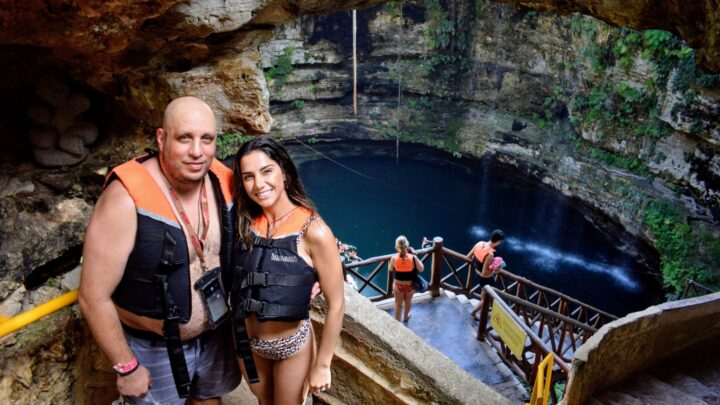
To the west, Chichen Itza (200 km, approximately 2.5 hours) is the apex of Maya architectural achievement. Carey Tours’ certified guides lead the Chichen Itza Express Private Tour with strategic early arrival—before the mass market buses reach the parking area. For a fuller day, the Chichen Itza and Cenote Sammal Private Tour adds a cenote swim at Hacienda Selva Maya. In addition, the Ek Balam and Cenote Private Tour visits the Yucatan’s most underrated pyramid—still climbable, still largely crowd-free.
Cenotes, Reefs, and Marine Wildlife
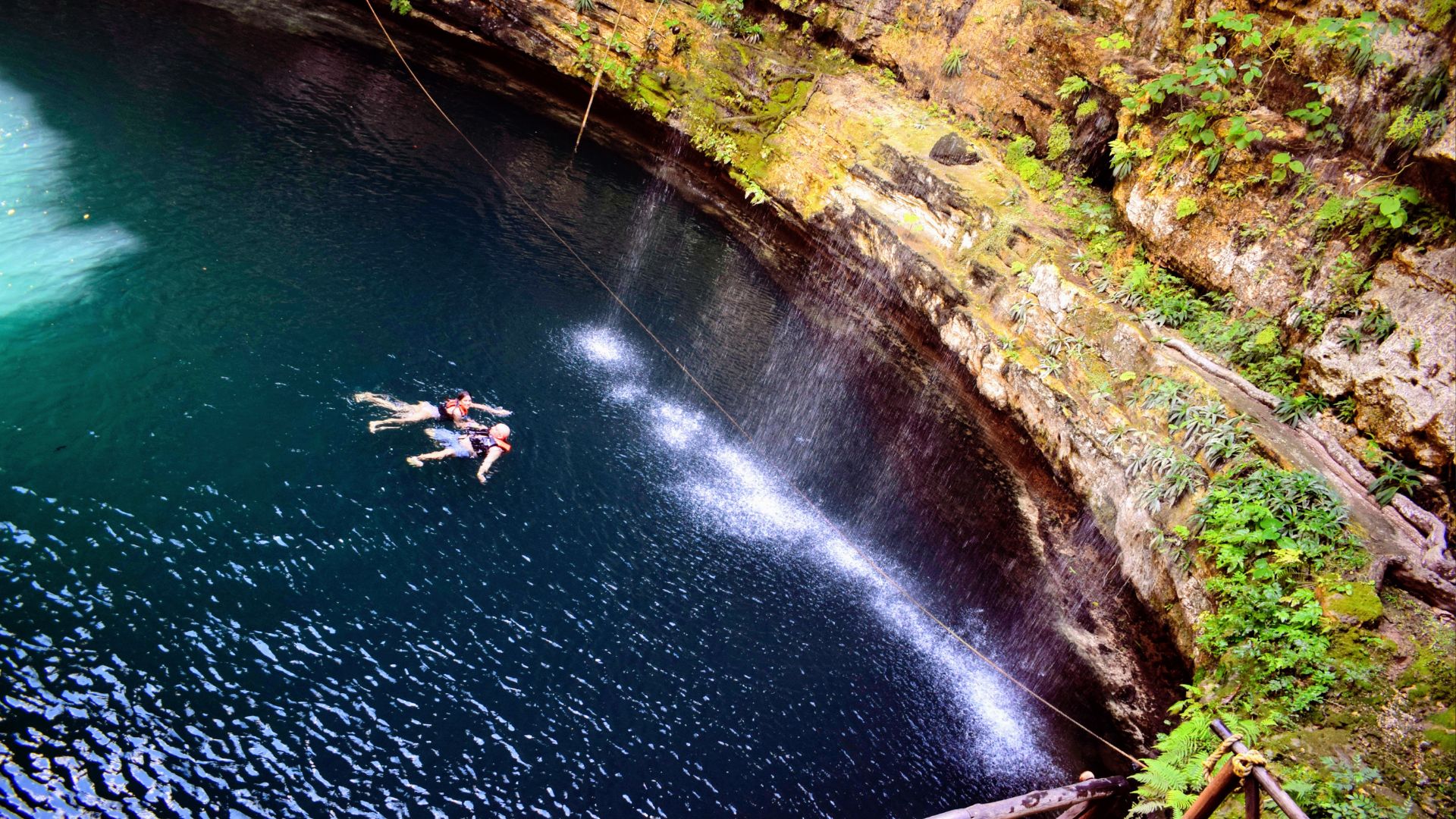
To the south, the cenote network surrounding Tulum offers freshwater swimming found nowhere else on Earth. Carey Tours’ Private Cenote Tour — 3 Cenotes in 1 Day visits Gran Cenote, Cenote Taak-Bi-Ha, and Cenote Xunan Ha in expert sequence. Similarly, the Dos Ojos Cenotes Park Private Tour offers cavern snorkeling through an 80+ km cave system.
In the open Caribbean, between June and September, whale sharks gather in warm waters accessible from Cancun. The Carey Tours Whale Shark Private Tour provides open-water snorkeling with these 40-foot gentle giants. Year-round, the Private Sea Turtle Snorkeling Tour in Akumal delivers near-guaranteed green sea turtle encounters just 90 minutes south.
Jungle Ruins and Wildlife Reserves
For travelers who want to go further, Coba’s Nohoch Mul pyramid remains one of the last climbable Maya structures in Mexico. The Coba Ruins & Punta Laguna Private Tour combines the pyramid climb with a spider monkey wildlife reserve. In addition, the Tulum Ruins & Akumal Sea Turtles Snorkeling Private Tour pairs clifftop Maya archaeology with Caribbean marine wildlife in a single well-paced private day.
Why Explore Cancun and Beyond with Carey Tours
A Team Built on Local Expertise
Carey Tours was founded in 2018 with a clear mission: offer fully private, expert-guided experiences across the Riviera Maya and Yucatán Peninsula. The team is made up of certified local guides with over 10 years of field experience each. They speak Spanish, English, and French, and they bring a genuine depth of knowledge—not just rehearsed scripts.
The team includes both male and female guides. They are friendly, respectful, and deeply familiar with the best spots, optimal timings, and hidden details that make each destination come alive. In addition, every tour is completely private—no strangers, no commission stops, no shared schedules. Your group sets the pace.
Fernando’s Role in Building the Experience
Carey Tours’ founder Fernando moved to Playa del Carmen in 1994 and has spent 15 years working as a certified tour guide across the region. His firsthand knowledge of the Riviera Maya—its roads, reefs, ruins, and rhythms—shapes every itinerary the team delivers. However, today’s experience is built by the whole Carey Tours crew. Together, they represent one of the most knowledgeable private guiding teams on the peninsula.
Plan Your Cancun Adventure — Private Tours Book Fast
Private tour spots in Cancun fill up quickly—especially during peak season (December–January and July–August) and for high-demand experiences like whale shark snorkeling. Therefore, the sooner you book, the more options you secure.
In addition, the larger your group, the better the value. Carey Tours tailors pricing and itineraries to your group size. A private tour shared between four, six, or eight travelers often costs less per person than a premium group excursion—while delivering an entirely different quality of experience.
Recommended private tours from Cancun:
- Chichen Itza Express Private Tour — Early access to the Yucatan’s greatest monument, before the crowds arrive
- Chichen Itza and Cenote Sammal Private Tour — UNESCO ruins combined with cenote swimming in one full private day
- 3 Cenotes in 1 Day Private Tour — Gran Cenote, Taak-Bi-Ha, and Xunan Ha with local lunch included
- Whale Shark Private Tour — Open-ocean swimming with the world’s largest fish (June–September only)
- Tulum Ruins & Akumal Sea Turtles Snorkeling Private Tour — Clifftop archaeology meets Caribbean marine wildlife
- Dos Ojos Cenotes Park Private Tour — Cavern snorkeling through one of the world’s great underwater cave systems
Contact Carey Tours via WhatsApp (+52 1 984 145 2640). Spots are limited and allocated on a first-come, first-served basis. Don’t wait until you arrive—the best dates go first.
Beyond the Hotel Zone, the Yucatan Peninsula is extraordinary. Carey Tours’ expert local team has spent years learning exactly how to show it to you—privately, at its best.
Frequently Asked Questions: Cancun Mexico
Cancun was developed from 1970 onward by FONATUR, Mexico’s federal tourism agency. A computer analysis identified the site as the country’s optimal large-scale international tourism location. The first hotel opened in 1974. Before development, the site housed approximately 117 fishing families and a coconut plantation.
Cancun derives from Yucatec Maya. The most common interpretation is “Nest of Snakes” or “Place of the Golden Snake”—a reference to the serpent symbolism central to Maya religious iconography. Some linguists also translate it as “Throne of the Snake.” The exact original meaning remains debated.
Enormously so. Within 2.5 hours of Cancun’s Hotel Zone you can visit Chichen Itza, Ek Balam, world-class cenotes near Tulum and Valladolid, whale shark snorkeling (June–September), sea turtle encounters at Akumal, Tulum ruins, Coba pyramid, Bacalar Lagoon, and Puerto Morelos reef snorkeling. Carey Tours offers all of these as fully private excursions with hotel pickup included.
Cancun’s economy is overwhelmingly tourism-dependent. Hotels, restaurants, tour operators, retail, and transportation—all directly or indirectly driven by tourism—employ the vast majority of the metro workforce. Cancun airport handles 10+ million international arrivals annually. Consequently, Quintana Roo state generates approximately 8% of Mexico’s GDP through tourism.
Downtown Cancun offers Mercado 23 and Mercado 28 (authentic food and craft markets), Parque Las Palapas (the local social hub with street food and live music), and neighborhood restaurants serving genuine Yucatecan food at a fraction of hotel zone prices. In addition, the Museum of the Maya World provides excellent pre-Columbian context for visitors heading to archaeological sites.
Yes. El Rey Archaeological Zone sits within the Hotel Zone itself—a Maya trading settlement with several structures now inhabited by large iguanas. San Miguelito, adjacent to the Museum of the Maya World, is another accessible site. Both offer genuine archaeological content without leaving the tourist corridor.
This depends on your interests. For archaeology, Chichen Itza is unmatched—however, early arrival is essential. For nature, the 3-Cenote Tour near Tulum offers three different freshwater swimming environments in one day. For wildlife, whale shark snorkeling (seasonal) or sea turtle encounters at Akumal are consistently transformative. Carey Tours’ certified guides customize the experience to your group’s priorities.
Group tours combine 20–50 strangers, add hotel pickup delays of 45–90 minutes, and include commission-based restaurant stops. In contrast, Carey Tours’ private excursions depart on your schedule, visit only meaningful destinations, and are guided by certified local experts with 10+ years of field experience. Furthermore, for groups of four or more, the per-person cost is often comparable to premium group options—with a dramatically better experience.
The Cancun Hotel Zone maintains a strong security presence and well-established tourist infrastructure. Standard precautions apply in downtown areas, as with any major Mexican city. Carey Tours’ certified guides accompany guests throughout all day excursions from Cancun, providing local knowledge and an additional layer of safety throughout the journey.

My friends and I made a last minute decision to try to see some cenotes prior to leaving Riviera Maya and we so happy that we did.
This tour was amazing! Not only were the cenotes beautiful, but our tour guide was amazing as well! He gave us some excellent history lessons on the cenotes and the areas around them. This company definitely knows what they are doing with tours to provide a personalized and memorable experience!
Mary Mier

We had a wonderful tour snorkeling and in to a cenote with Yosh through Carey Tours! He was kind, patient, knowledgeable, funny, and added a lot to our overall experience. He even allowed us some time in a beautiful quiet part of the cenote to meditate and appreciate the wonder of it all. We would absolutely recommend Yosh and Carey Tours!
Amanda Halabi